





UAT (user acceptance testing) and end-to-end (E2E) testing both validate complete workflows, but they differ in intent. E2E testing verifies that a system works technically across all integrated components and is run by QA or automation. UAT verifies that the software meets business requirements and is run by real users or clients before release.
There are so many types of software testing that it is easy to mix them up. User Acceptance Testing (UAT) and End-to-End Testing (E2E) often sound like they do the same thing, but they do not. One checks whether your app works as a whole, and the other checks whether it works the way users actually need it to. Let’s break it down.

What is UAT testing?
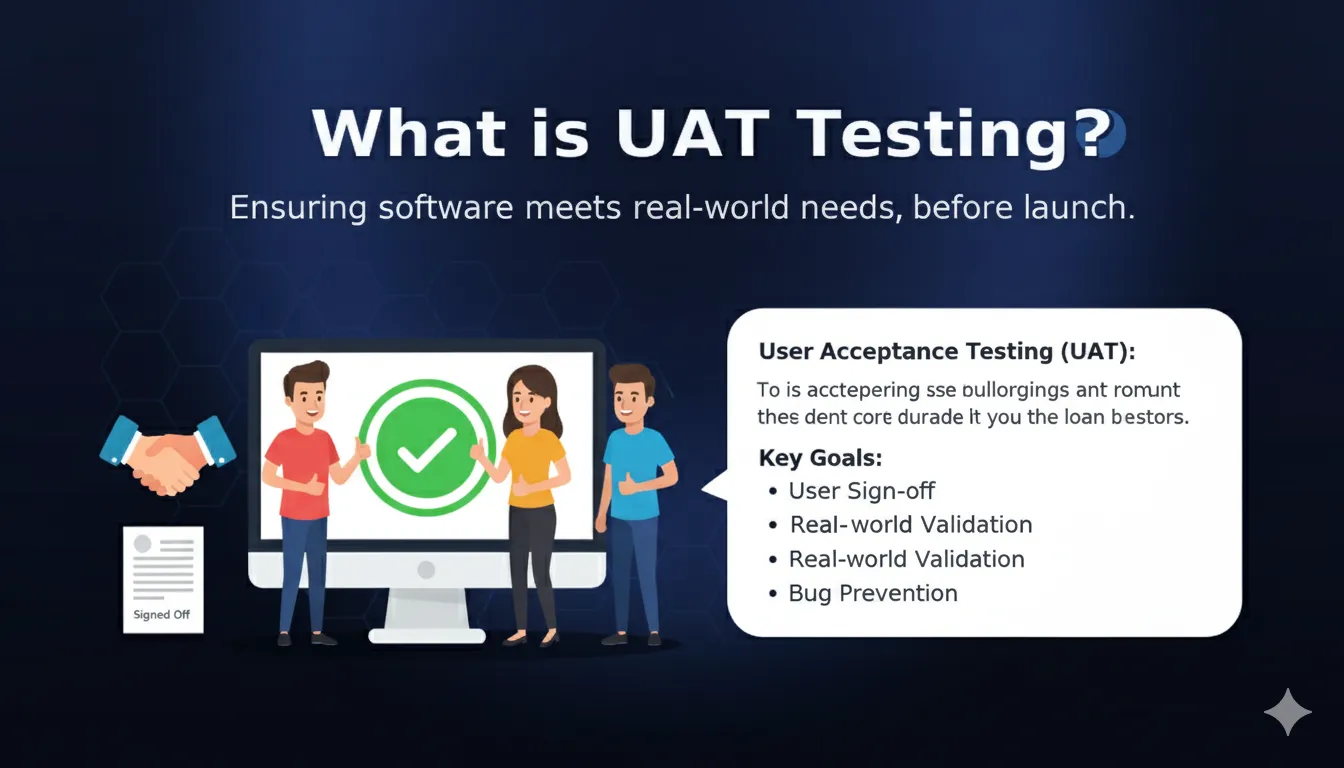
User Acceptance Testing, or UAT, is the final test before software goes live. It is conducted by end users or their representatives to determine whether the system meets business requirements and is ready for production. The goal is to evaluate the system’s usability, reliability, and compliance from an end user’s point of view.
How does UAT work?
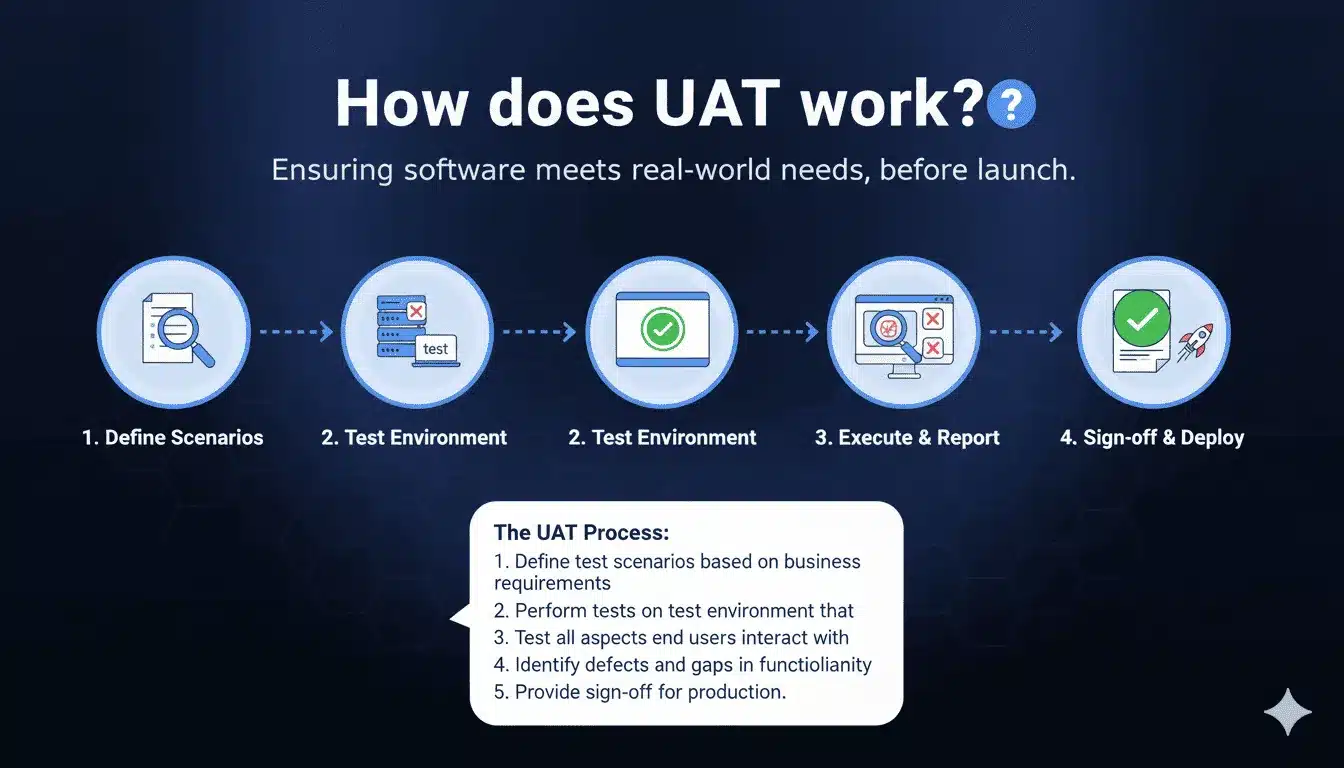
UAT runs in a test environment that mirrors production. Users work through realistic scenarios, report anything that does not match their needs, and give the green light once everyone agrees the software is ready. The process typically involves:
- Defining test scenarios based on business requirements
- Performing tests on an environment that mimics production
- Testing every part of the system that end users will interact with
- Identifying defects and gaps in functionality
- Providing sign-off to indicate the system is ready for production
Many teams write UAT scenarios as Given-When-Then acceptance criteria, the same format used in BDD testing. This keeps the scenarios readable for business users and makes them easy to automate later.
What is E2E testing?
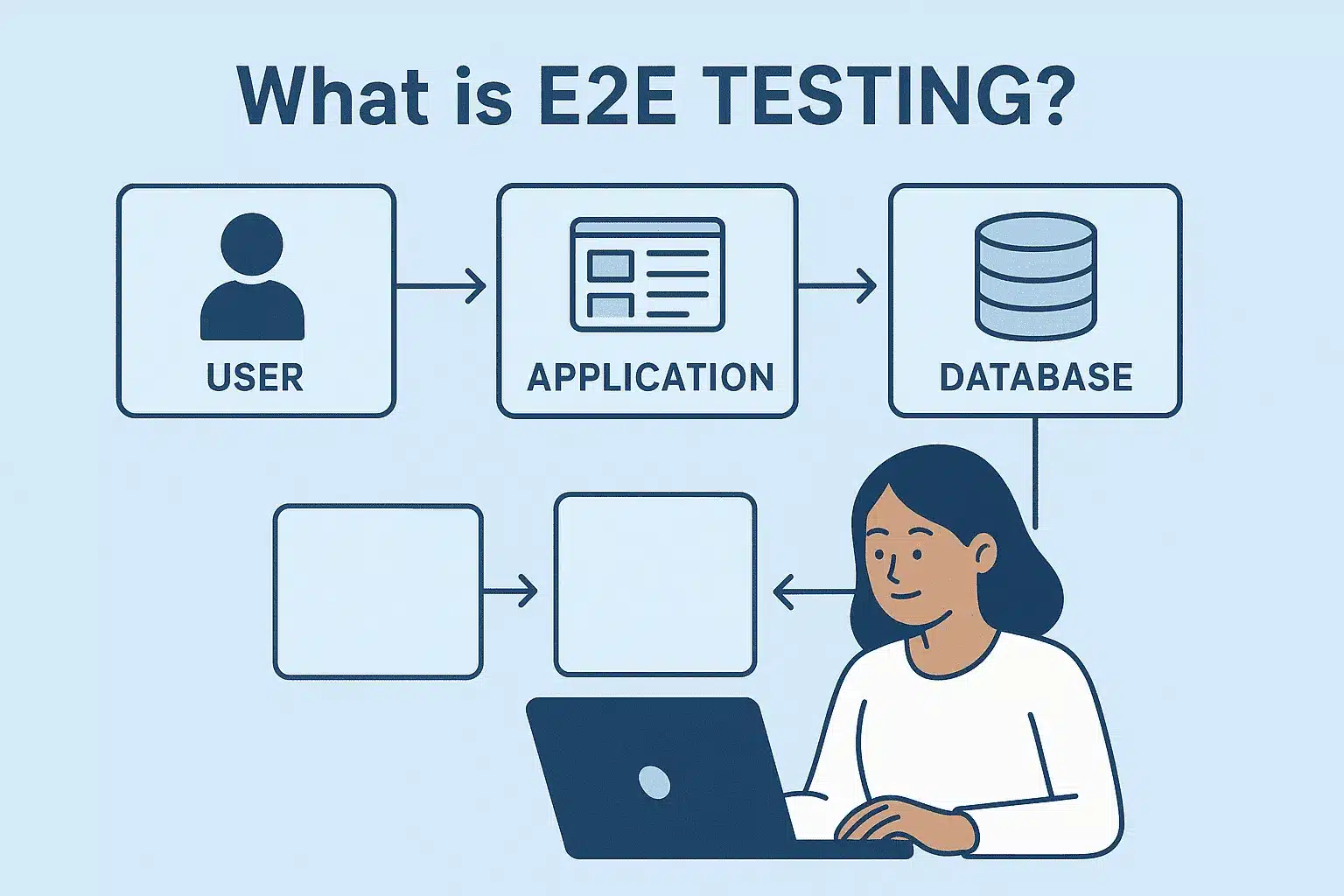
E2E testing looks at the big picture: how all the different parts of the software work together. Its goal is to ensure the software functions correctly from start to finish, from the moment a user opens the app to the moment they finish their task. It is a different scope from unit testing, which checks individual pieces in isolation.
How does E2E testing work?
E2E tests follow complete workflows across the frontend, backend, databases, and any external systems the software depends on. They confirm that data flows correctly between components and flag issues like broken integrations or lost data for developers to fix. The E2E testing process typically involves:
- Defining test scenarios that exercise all parts of the system
- Testing the system from initial input to final output
- Testing interactions between system components and external interfaces
- Ensuring data and requests flow correctly between components
- Identifying defects in system integration and end-to-end workflows
E2E testing also overlaps with integration testing. For a closer look at that boundary, read our guide on E2E vs integration testing.
Differences between UAT and E2E testing
| Criteria | UAT | E2E testing |
|---|---|---|
| Focus | Business requirements from the user’s point of view | System integration and end-to-end workflows |
| Who tests | End users, clients, or business stakeholders | QA engineers and developers |
| What is tested | User-facing functionality | The entire system, including components users never see |
| Where | A production-like environment | Test or staging environments |
| When | The last step before release | Before UAT, often on every build |
| Usually | Manual | Automated |
| Outcome | Sign-off that the software fits business needs | Defect reports on integration and workflow issues |
Conclusion
UAT and E2E testing answer two different questions. E2E testing asks whether the system works technically from start to finish, while UAT asks whether it does what the business and its users actually need. Running both gives you confidence in the technology and in the product before launch.
FAQs
Which comes first, E2E testing or UAT?
E2E testing comes first. QA teams confirm the system works technically across all components, and only then do business users run UAT to confirm it meets their requirements. Running UAT on a system that has not passed E2E testing wastes users’ time on technical bugs.
Why is UAT necessary if E2E testing covers the entire system?
E2E testing can prove that every component works together and still miss that a feature solves the wrong problem. UAT is the only check that confirms the software matches what users and the business actually need.
Is UAT the same as acceptance testing?
UAT is one type of acceptance testing. Acceptance testing can also include operational acceptance testing, contract acceptance testing, and regulatory acceptance testing, while UAT focuses specifically on end users confirming the software meets their needs.
What roles do business users and testers play in UAT and E2E testing?
In UAT, business users validate whether the software meets their functional and business needs. In E2E testing, QA engineers verify the system’s behavior across all integrated components. Keploy helps both groups by generating tests from real API interactions, which makes validation faster and more realistic.
Can UAT and E2E testing be automated?
E2E testing is often automated using tools like Selenium, Cypress, or Keploy. UAT is usually manual, but parts of it can be automated. Keploy records real API traffic from staging or production and replays it as automated tests, which covers the backend side of UAT scenarios and reduces manual effort while keeping tests realistic.