End-to-End Testing
What Is E2E Testing?
End-to-end testing validates complete user workflows from the UI through all backend services, databases, and third-party integrations — simulating real user actions to verify the entire system works as a whole.
E2E tests sit at the top of the testing pyramid. They provide the highest confidence but are the slowest and most expensive to maintain.
A typical E2E test: navigate to homepage, search product, add to cart, enter shipping, complete payment, verify confirmation — exercising frontend, APIs, payment gateway, and database.
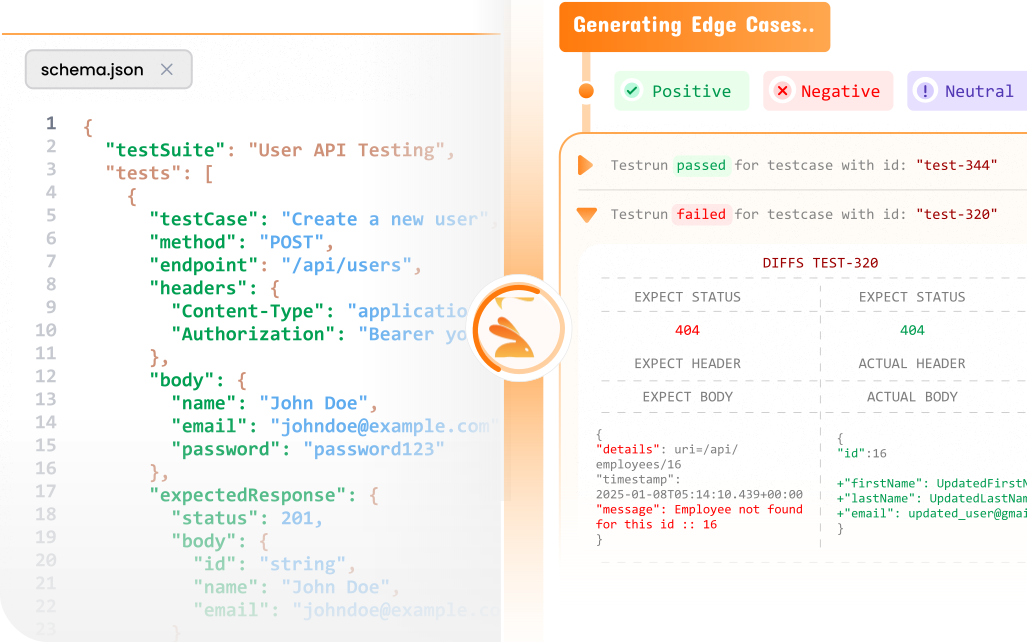
The Testing Pyramid
Balance speed, confidence, and cost. More tests at the base, fewer at the top.
Keploy fills the gap — API-level tests that provide near-E2E confidence at integration-test speed.
How Keploy Complements E2E Testing
Keploy doesn't replace Playwright or Cypress — it fills the backend coverage gap.
The Backend Coverage Problem
Browser E2E tests only cover happy paths. Writing tests for every error path is prohibitively slow. Result: 5-10 workflows tested, hundreds of backend paths untested.
Traffic-Based Coverage
Keploy captures real API traffic via eBPF — production patterns, edge cases, errors. Each request becomes a replayable test running in milliseconds.
Keploy for Backend
API-level tests from real traffic. Run on every PR in seconds. Catches regressions browser tests miss.
Playwright/Cypress for UI
5-15 critical user journeys where UI behavior matters. Smoke subset on PRs, full suite nightly.
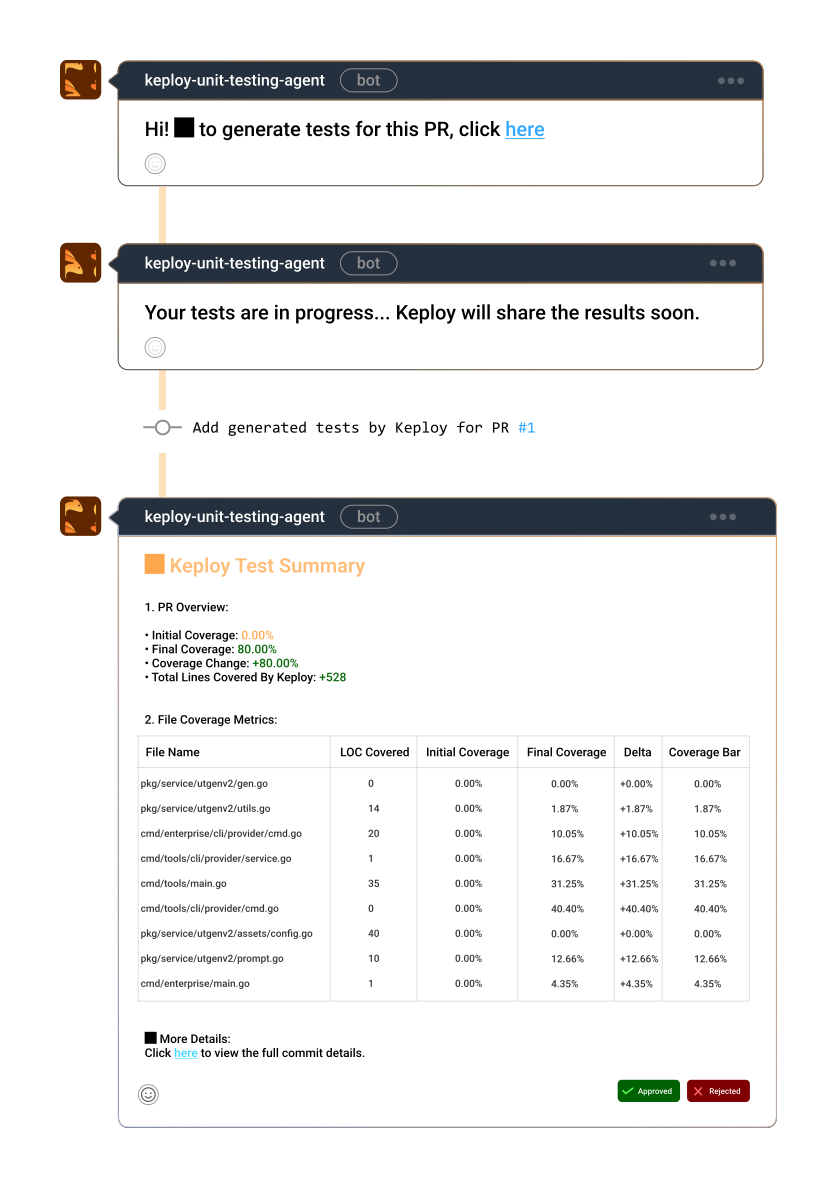
Building Your E2E Test Suite
A step-by-step approach that stays maintainable.
Identify Critical Journeys
List user workflows that cause business impact if broken: signup, login, core feature, payment, settings. Limit to 5-10 journeys.
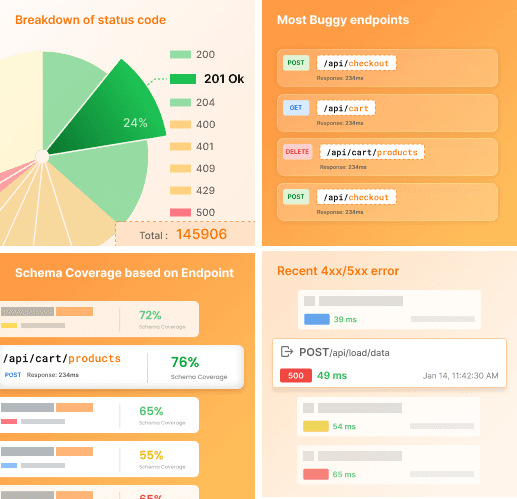
Choose Your Tools
Playwright for cross-browser UI tests. Keploy for API-level backend coverage. Use both — they're complementary, not competing.
Implement Page Objects
Encapsulate selectors and actions per page. Tests interact with page objects, not raw DOM. This makes tests resilient to UI changes.
Integrate into CI/CD
Run a smoke subset on every PR (2-3 min). Full suite on merge to main. Keploy API tests on every commit (seconds).
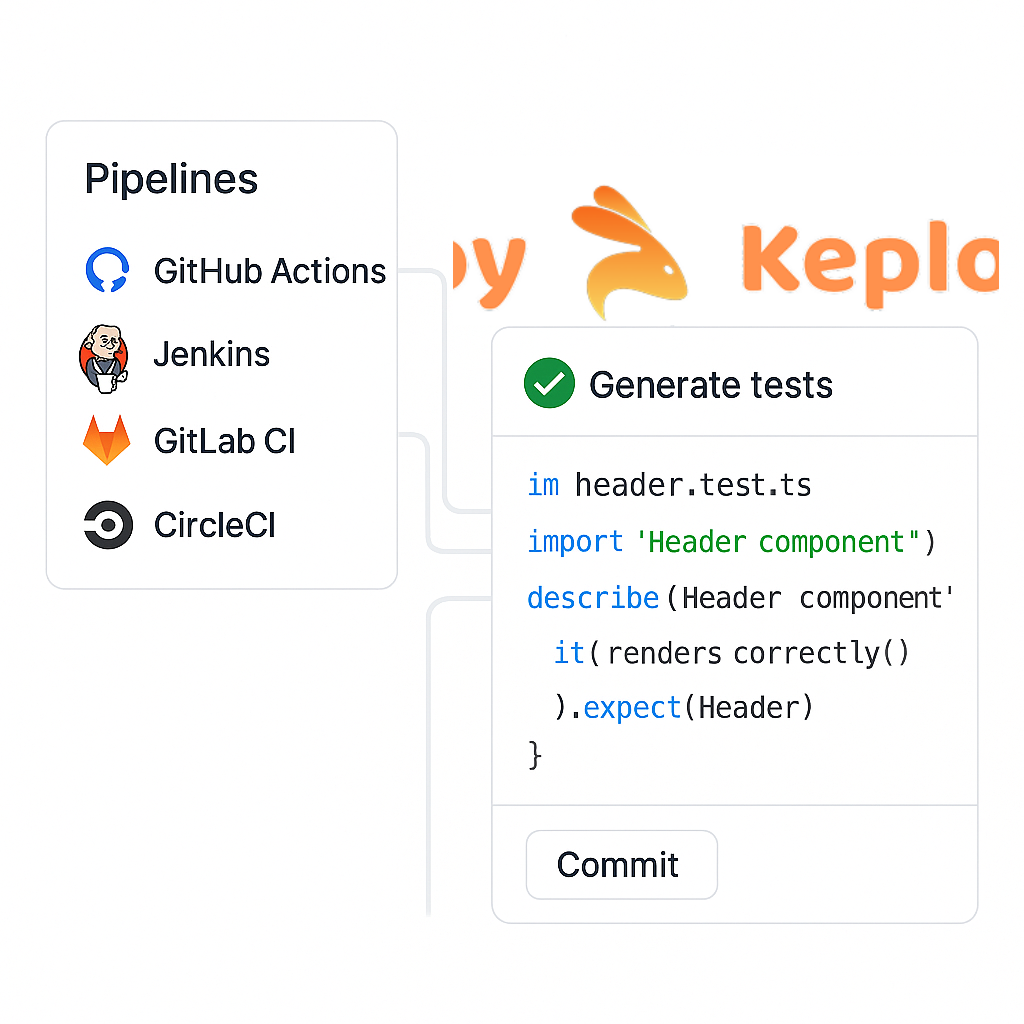
Monitor & Maintain
Track flake rate, execution time, and coverage gaps. Invest in fixing flaky tests before writing new ones.
E2E Testing Best Practices
Principles for suites that stay fast, stable, and maintainable.
Test what users see
Write E2E tests from the user's perspective. Use data-testid attributes, not CSS selectors that break on redesigns.
Keep E2E tests minimal
Cover only critical revenue-impacting journeys. Push everything else to integration or unit tests.
Parallelize execution
Run E2E tests across multiple workers. Playwright supports sharding natively. Never run sequentially in CI.
Isolate test data
Each test should create its own data and clean up. Never share state between tests — it causes ordering dependencies.
Quarantine flaky tests
Track flake rate per test. Quarantine tests above 2% and fix root causes instead of retrying.
Measure, don't guess
Track suite execution time, flake rate, and coverage per user journey. Set alerts when metrics regress.
See Keploy in Action
How Keploy captures traffic, generates mocks, and eliminates flaky tests at the API layer.
FAQs
Join our GlobalCommunity
Connect with developers worldwide. Follow updates, ask questions, share feedback, and ship faster with other Keploy builders.


“Best report of integration and API tests I've seen — which we don't get from RestAssured.”
G2“Future of microservices testing. I don't write tests now!”
Mahfooz A. · G2 · 5/5“An amazing product that simplifies the automation.”
Gartner · 4.0