The Problem
Teams kept reporting the same issue: "All our tests passed, but it still broke in production." The culprit? Edge cases nobody thought to test — null values, boundary conditions, unexpected inputs. Manual testing focuses on happy paths because that's what there's time for. Edge cases get pushed to "later" and never happen.
What's New
Keploy adds automatic edge case and error detection. Keploy now generates tests for null values, boundary conditions, malformed inputs, and error scenarios — catching the production bugs that slip through happy-path testing.
Automated Edge Case Coverage
Keploy automatically tests beyond happy paths — ensuring your APIs hold up under real-world, unpredictable scenarios:
Error Scenarios
Detects wrong data types (string vs integer), null values, negative numbers, and missing required fields.
Boundary Conditions
Checks maximum/minimum string lengths, extreme numeric values, empty arrays, and oversized payloads.
Unexpected Inputs
Handles malformed JSON, extra fields not in schema, or valid structures with invalid values.
Regression Detection
Re-runs edge case tests after code changes — catching regressions before they reach production.
Manual vs. Automated Coverage
Example: POST /api/checkout
Before
Manual Testing
- 2-3 tests (successful checkout, maybe invalid userId)
- ~30% of failure scenarios covered
After
Keploy
- 25+ tests including data types, null checks, boundaries, malformed inputs
- ~90% of failure scenarios covered
What Keploy Auto-Generates
- userId as string / null / negative number
- Empty or invalid items array structure
- totalAmount as negative / string / null / extreme values
- Missing or invalid currency field
- Malformed JSON and extra fields
Why This Matters
Analysis of production incidents shows ~70% of API bugs come from edge cases and error handling, not main business logic. These bugs are preventable but require systematic testing most teams don't have bandwidth for. Keploy automates comprehensive edge case coverage, catching issues before they reach production.
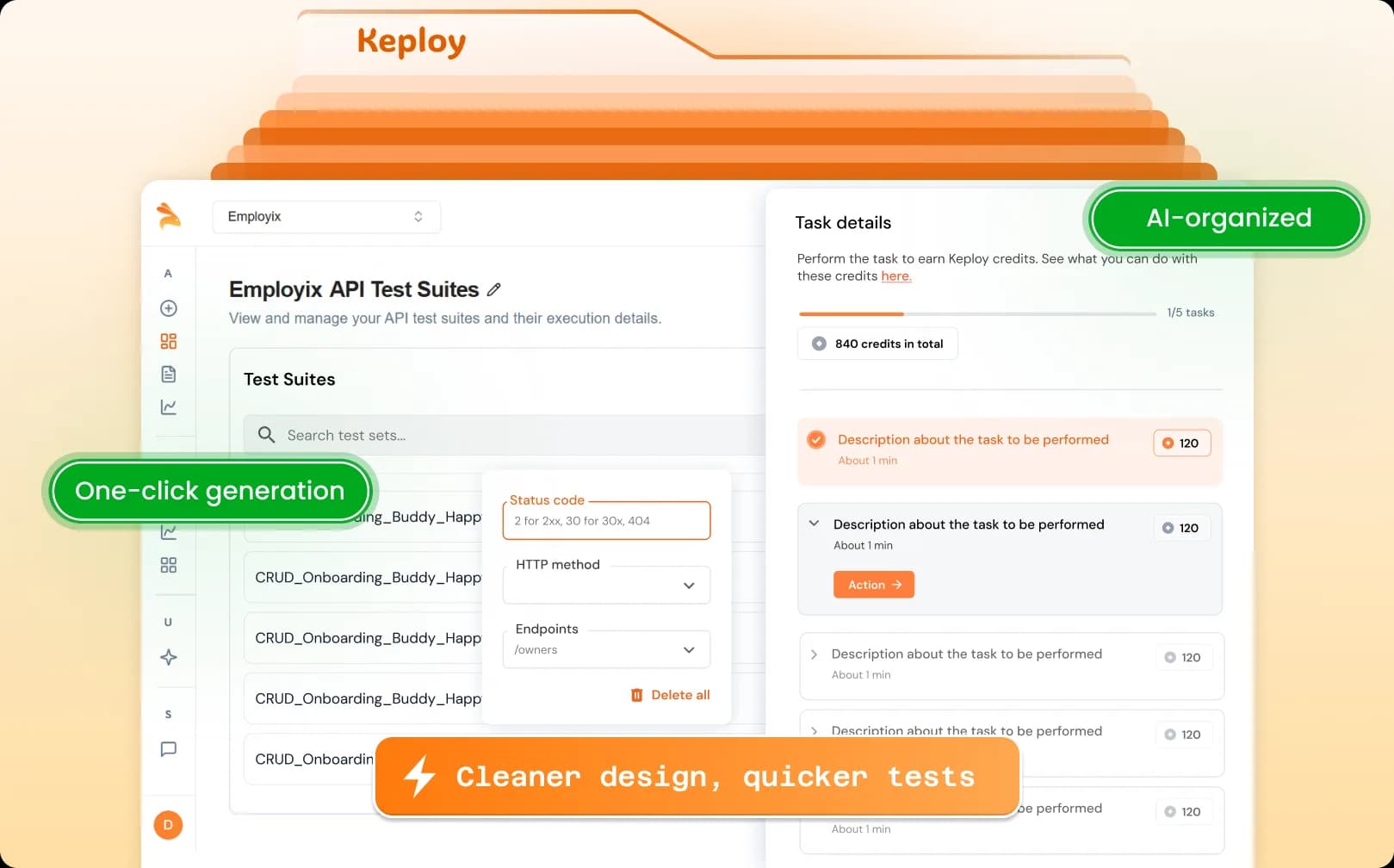
Granular filters and assertion diffs make debugging faster than ever.