Functions & Schema Assertions
B. Functions & Assertions: Logic & Integrity
Assertions define the "Pass/Fail" criteria for your tests. While standard checks confirm status codes, comprehensive auditing requires validating data integrity through Schema and Logical validations.
- Schema Assertions: These verify that an API consistently returns the correct data types (e.g., string, integer), preventing breaking changes from reaching production.
- Custom Functions: Use these for complex logic that simple matching cannot handle, such as verifying if a timestamp falls within a specific range.
- Global Functions: Repeatable logic can be saved to the Global library for team-wide reuse.
Hands-On: Schema Assertions
1. Selecting Fields to Assert
Choose specifically which parts of a JSON response Keploy should validate during a replay.
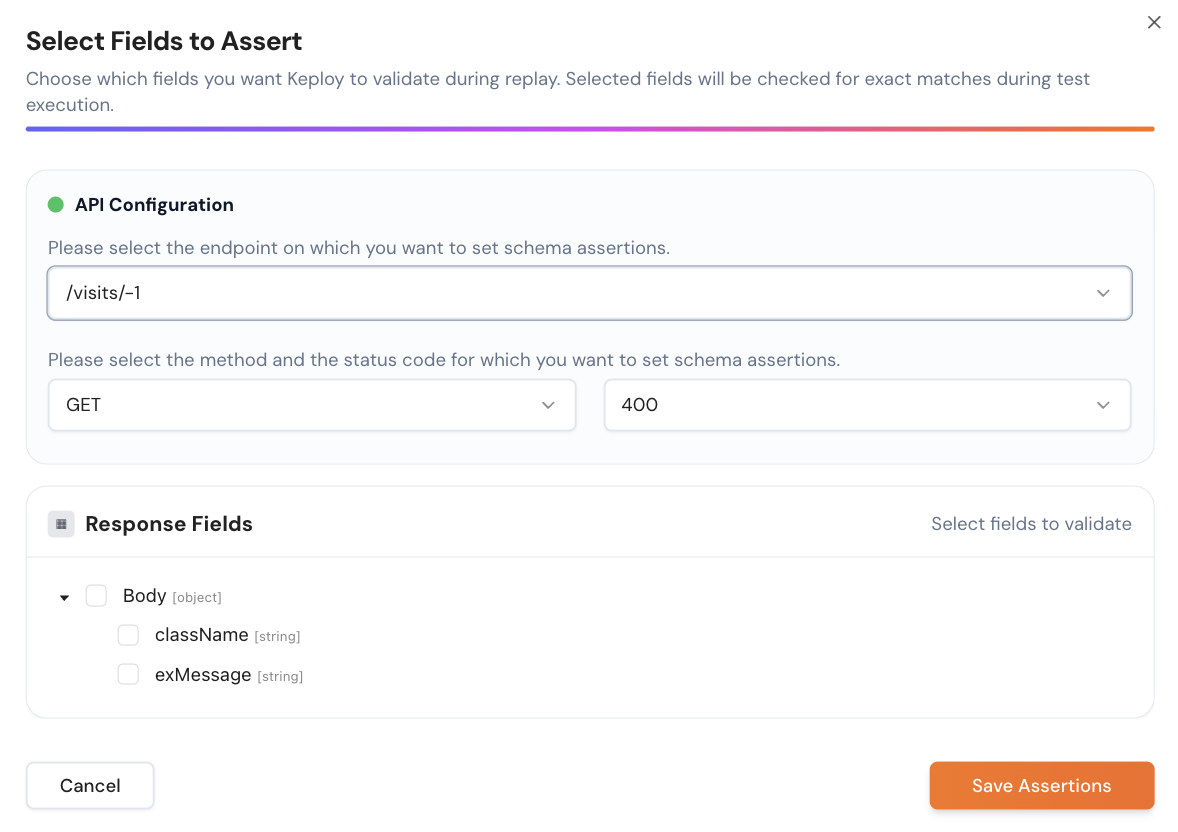
Example Context: In this window, we are targeting a GET request on the /visits/-1 endpoint that expects a 400 status code. Under Response Fields, specific keys like className and exMessage are selected. Toggling these ensures Keploy validates that these fields are returned as the correct data type (strings) during every replay.
2. Multi-Type Assertions
Stack different assertion types, such as verifying a status code while simultaneously checking if a specific field contains a certain value.
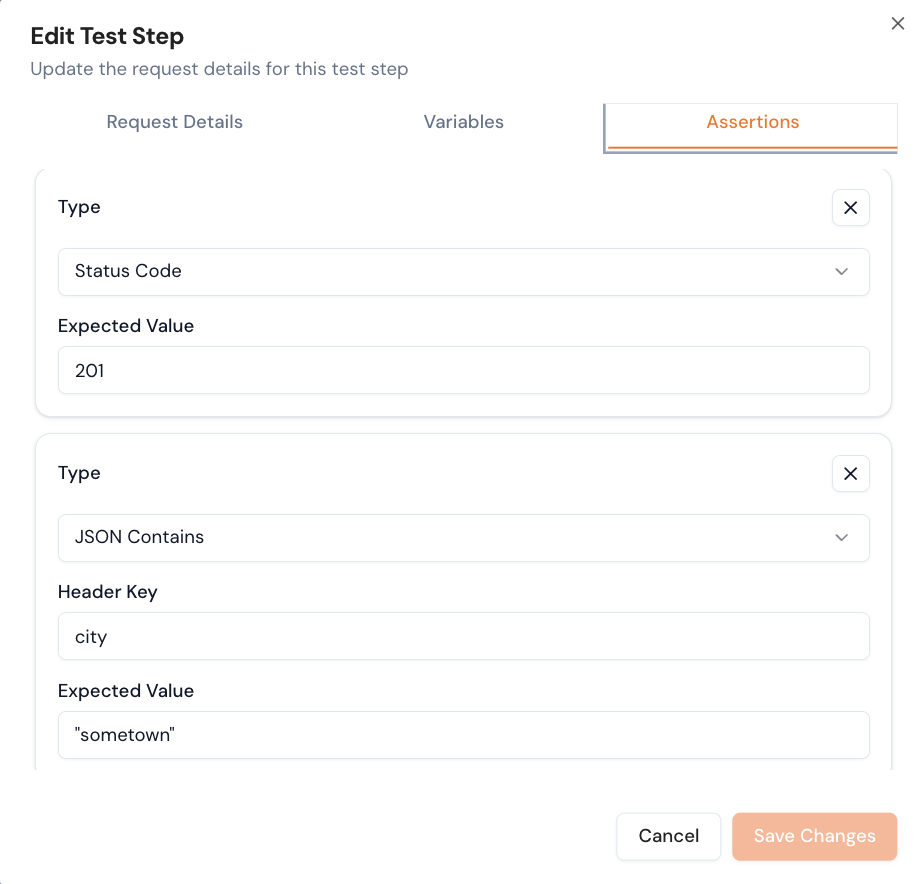
Example Context: This setup enforces two rules simultaneously:
- Status Code: Validates that the server returns a
201(Created). - JSON Contains: Specifically checks the
cityheader/field to ensure it matches the expected value"sometown".
Custom & Global Functions
1. Writing Inline Logic
Access the request and response objects directly to create complex rules within the assertion panel.
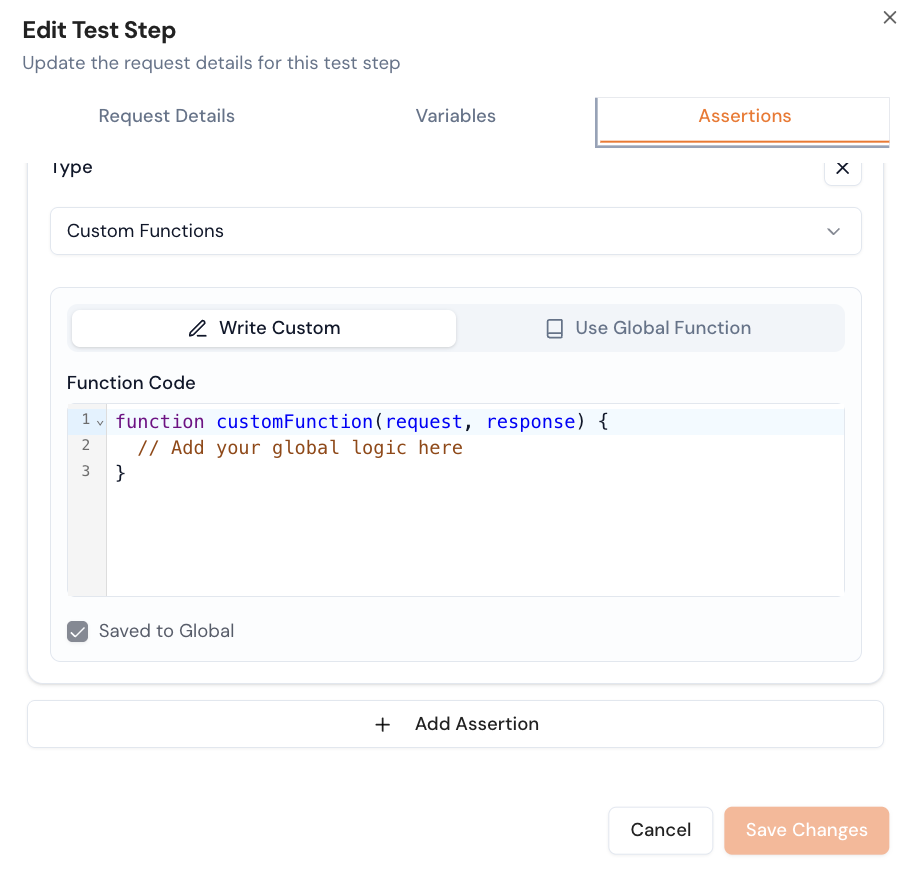
Example Context: The editor shows a function signature: function customFunction(request, response). This gives you direct access to the full objects, allowing you to write JavaScript logic to determine if the test should pass based on dynamic conditions.
2. Global Function Library
Save repeatable validation rules to the Global Custom Functions library so they can be reused across your entire development team.
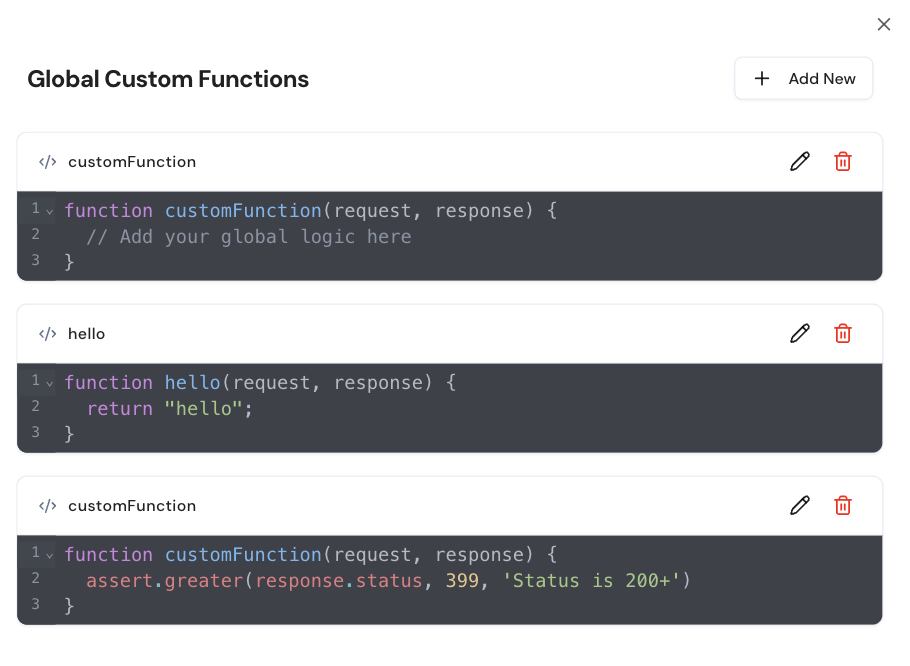
Example Context: The library shows reusable logic stored globally. For example, the customFunction at the bottom demonstrates an assert.greater(response.status, 399) utility, creating a standardized rule to verify error-level status codes across multiple suites.