





A software testing strategy defines how, when, and what to test across a project, spanning test levels, functional and non-functional types, and approaches like automation, risk-based, and shift-left testing. Within the automation piece, Keploy reduces manual effort on API and integration tests by generating both the tests and their mocks from real traffic.
Software testing strategies define how teams plan, organize, and execute testing activities throughout the software development lifecycle. A well-structured testing strategy helps teams detect defects earlier, maintain product reliability, and adopt a strong quality engineering approach for continuous improvement.
Modern development environments rely heavily on Agile workflows, microservices architectures, APIs, and CI/CD pipelines. Without a defined testing strategy, teams often struggle with late defect detection, unstable automation, and unpredictable release cycles.
In this guide, we’ll explore software testing strategies, their types, techniques, real-world examples, best practices, and modern approaches used by development teams today.
Understanding these strategies helps teams design reliable testing workflows and maintain software quality across fast-moving development cycles.
What Are Software Testing Strategies?
A software testing strategy is a high-level plan that defines how testing activities are designed, executed, and managed during the software development lifecycle. It outlines the testing approach, tools, environments, risk areas, and quality goals required to ensure reliable software delivery.
Unlike individual test cases or scripts, a testing strategy focuses on the overall framework for maintaining software quality across multiple releases.
A strong testing strategy typically answers questions such as:
-
What types of testing should be performed?
-
Which tools and frameworks will be used?
-
When should testing occur in the development lifecycle?
-
How will testing results be measured and reported?
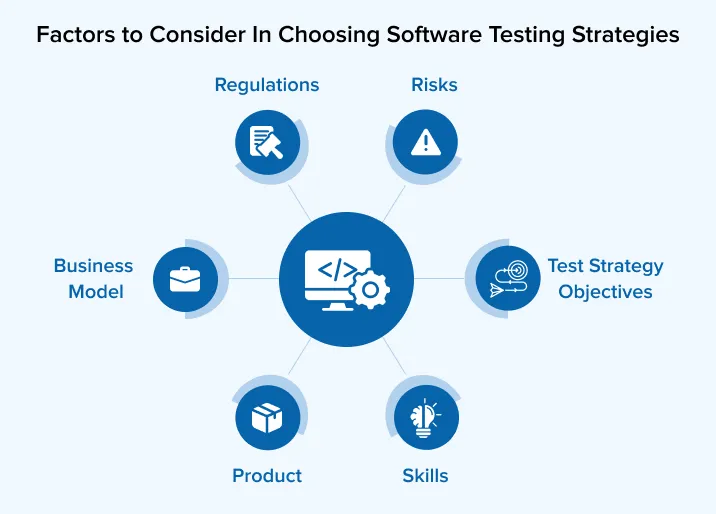
By defining these aspects early, teams can create predictable and scalable testing workflows.
Why Software Testing Strategies Are Important
A clear testing strategy matters because it shifts defect detection earlier, keeps automation effort focused, and makes release timelines predictable instead of reactive.
Whenever I’ve worked on projects without a clear strategy, the same problems show up:
-
Defects reaching production
-
Critical issues discovered late
-
Flaky automation and wasted effort
-
Unpredictable release cycles
With a defined strategy in place, I’ve seen clear improvements:
-
Risks identified earlier
-
Effort focused where it matters
-
Automation delivering real value
-
Releases becoming stable and repeatable
In fast-moving environments, a well-defined strategy helps balance speed, quality, and cost without slowing delivery.
Key Components of a Software Testing Strategy
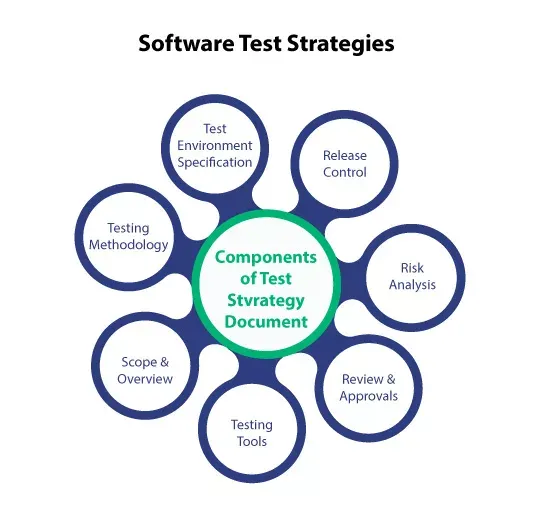
A comprehensive software testing strategy includes several core components that guide how testing activities are planned, executed, and evaluated throughout the software development lifecycle.
1. Testing Objectives
Testing objectives define the overall goals of the testing process. They help teams understand what quality standards must be achieved and what risks need to be minimized before software is released.
2. Testing Scope
The testing scope identifies which parts of the system will be tested and which areas may be excluded. It ensures that critical modules, integrations, and features receive proper validation during the testing process.
3. Types of Testing
This component specifies the different testing approaches that will be used, such as functional testing, performance testing, security testing, and regression testing. Selecting the right testing types ensures comprehensive validation of the application.
4. Testing Tools and Frameworks
Testing tools and frameworks support the execution and automation of test cases. Teams often use test management tools to organize and track test cases, alongside tools for UI testing, API testing, performance testing, and CI/CD integration.
5. Test Environments
Test environments represent the infrastructure where testing activities take place. These environments should closely resemble the production environment to ensure accurate and reliable testing results.
6. Automation Strategy
An automation strategy defines which test cases should be automated and how automation fits into the development pipeline. Test automation is typically used for repetitive tasks such as regression testing and CI/CD validation.









Celebrate with us
Get 1 Month of FREE
Keploy Credits
Celebrate with us
Get 1 Month of FREE Keploy Credits
Celebrating 5 years of Keploy - claim one month of free credits.
Claim 1 Month of Free Credits7. Entry and Exit Criteria
Entry and exit criteria establish the conditions required to begin and complete testing phases. These criteria help teams maintain consistency and ensure that testing is performed only when builds are stable.
8. Metrics and Reporting
Metrics and reporting help teams evaluate testing effectiveness by tracking indicators such as test coverage, defect density, and automation success rates. These insights allow teams to continuously improve their testing processes.
Who Owns the Software Testing Strategy?
Ownership typically falls to whoever leads QA, though it shifts depending on team size and maturity:
-
QA Manager or Test Lead in most teams
-
Engineering Manager in smaller setups
-
QA Architect in enterprise environments
-
Shared ownership across QA, Dev, and Product in Agile teams
Even when one person owns the document, the strategy works best when it’s collaborative and evolves with the product.
Test Strategy vs Test Plan in Software Testing
A test strategy is the high-level, long-term approach; a test plan is the detailed, short-term execution document for a specific release. I often see teams mix these two up, so I keep the distinction simple.
| Aspect | Test Strategy | Test Plan |
|---|---|---|
| Level | High-level | Detailed |
| Scope | Project or organization | Specific release |
| Focus | Testing approach | Execution details |
| Stability | Long-term | Short-term |
| Created by | QA leadership | QA team |
A test strategy defines the overall approach and remains stable over time.
A test plan focuses on execution details for a specific release and changes more frequently.
Both are necessary, but they serve different purposes at different levels. In my experience, teams that struggle to differentiate between these two often need to revisit core software testing basics before defining higher-level strategy decisions.
Types of Software Testing Strategies
Common levels of testing used when defining a software testing strategy.
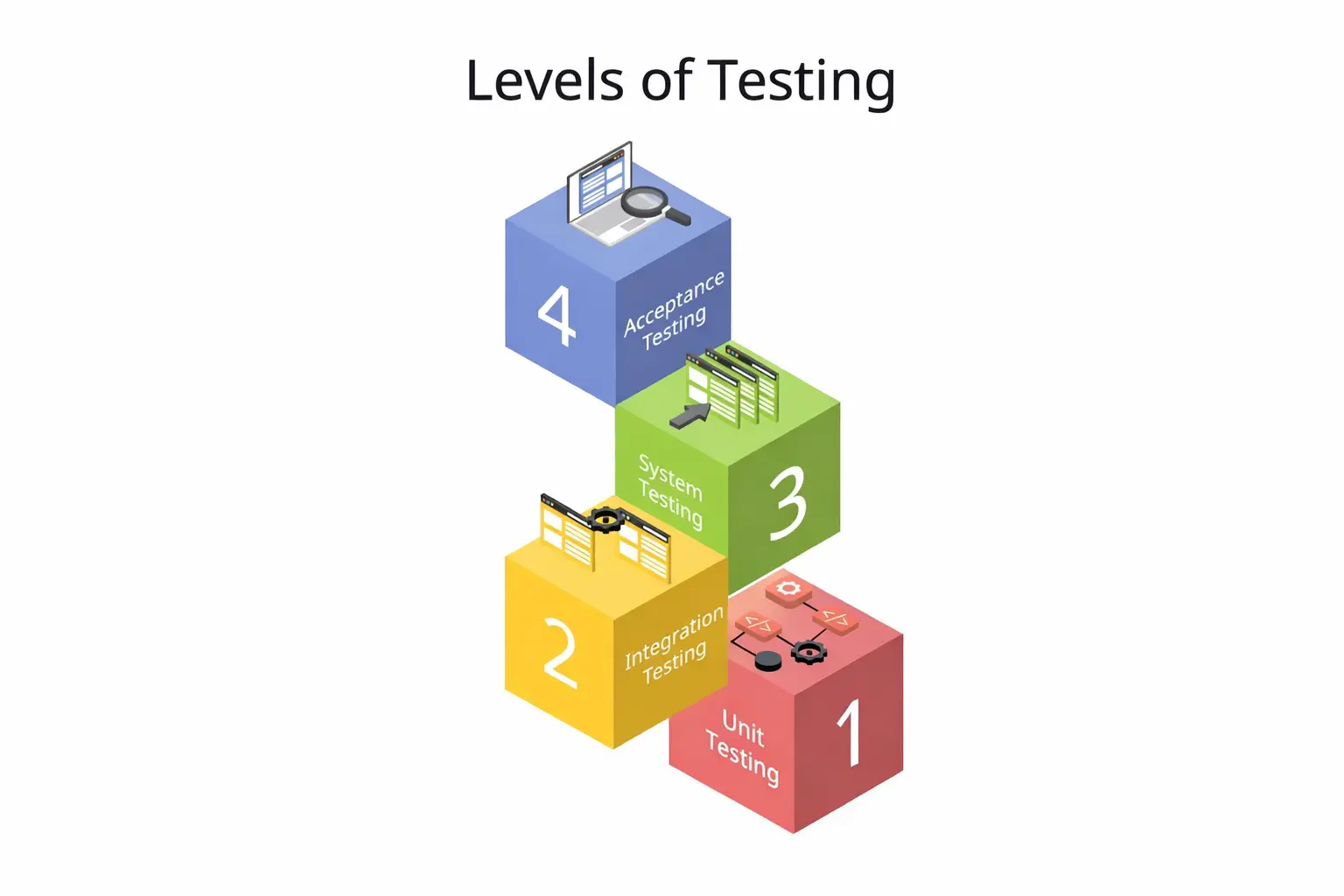
In real-world projects, I rarely rely on a single testing approach. Most teams combine multiple testing strategies depending on risk, system complexity, and development speed.
Manual Testing Strategy
I rely on manual testing mainly to:
-
Explore real user flows
-
Validate edge cases
-
Debug issues during development
Even during manual validation, tools matter. I often use Postman for API exploration, BrowserStack for cross-browser checks, and Keploy to capture real API interactions triggered manually. Those captured flows later become reusable test cases.
Automation Testing Strategy
Automation delivers the most value for:
-
Regression and smoke coverage
-
CI/CD pipelines
-
Repetitive and stable workflows
Here, I usually combine UI tools like Selenium or Playwright with API-level coverage. Keploy reduces manual scripting by converting real traffic into automated regression checks that run in pipelines.
API Testing Strategy
I prefer API testing at the service level when:
-
Business logic lives at the service layer
-
UI checks become slow or flaky
-
Systems are built around microservices
API checks run faster, break less often, and scale better. I use Postman during early validation and rely on Keploy to capture real API traffic and replay it later during regression runs.
Regression Testing Strategy
Regression testing coverage helps ensure new changes don’t break existing functionality.
-
Mix of automated and targeted manual checks
-
Critical before every release
Keploy plays an important role here by replaying previously captured API flows, which makes regression more realistic and less brittle.
Performance and Security Testing Strategy
This strategy validates how the system behaves under realistic and extreme conditions rather than whether features work.
Performance testing covers several named methods, each answering a different question. Load testing checks behavior under expected traffic. Stress testing pushes beyond expected limits to find the breaking point. Soak testing runs sustained load over hours to expose memory leaks and degradation. Spike testing validates recovery from sudden traffic surges. I usually run these at defined milestones using tools like JMeter or k6 instead of on every build, since they are expensive to execute and their results only change when architecture or traffic patterns change.
Celebrate with us
Get 1 Month of FREE
Keploy Credits
Celebrate with us
Get 1 Month of FREE Keploy Credits
Celebrating 5 years of Keploy - claim one month of free credits.
Claim 1 Month of Free CreditsSecurity testing splits into two complementary methods. SAST, or static application security testing, scans source code for vulnerabilities without running it and fits naturally into pull request checks. DAST, or dynamic application security testing, probes the running application the way an attacker would and typically runs against staging environments before major releases. Dependency scanning rounds this out by catching known vulnerabilities in third-party packages.
The mistake I see most often is treating both as one-time pre-release gates. Performance baselines and security scans deliver far more value when they run on a schedule and their trends get tracked release over release.
Software Testing Techniques Used Within a Strategy
Software testing techniques are the specific methods used to design and select test cases within a broader testing strategy. A strategy decides what to test and when, while techniques decide how individual test cases get created. In my experience, teams that skip this layer end up with hundreds of test cases that all cover the same happy path.
Testing techniques fall into three groups, and most real projects use all of them.
Black Box Testing Techniques
Black box testing techniques design test cases from requirements and expected behavior without looking at the code. These are the techniques I reach for most often when validating APIs and user-facing features:
Equivalence partitioning divides inputs into groups that should behave the same way, so you test one value per group instead of every possible value. If an API accepts user ages from 18 to 60, I test one valid value like 30, one below range, and one above range instead of testing all 43 valid ages.
Boundary value analysis targets the edges where most defects hide. For that same 18 to 60 input, I test 17, 18, 60, and 61. In years of API validation, I have seen more bugs at boundaries than anywhere else in the input space.
Decision table testing maps combinations of conditions to expected outcomes. It works well for business rules like discount logic, where the result depends on multiple inputs interacting.
State transition testing validates how a system moves between states, such as an order going from placed to paid to shipped. Invalid transitions, like shipping an unpaid order, are exactly what this technique catches.
Error guessing relies on experience to predict where defects are likely, like empty payloads, special characters, or duplicate submissions.
White Box Testing Techniques
White box techniques design tests from the internal structure of the code, which is why developers usually own them:
Statement coverage ensures every line of code executes at least once during testing.
Branch coverage goes further and validates every decision outcome, so both the true and false paths of each condition run.
Path coverage tests the distinct routes through a function, which grows quickly in complex code and usually gets prioritized by risk.
Mutation testing intentionally introduces small faults into the code to check whether the existing test suite catches them. A suite that stays green after mutations is not testing what you think it is.
Experience-Based Techniques
Not everything can be derived from requirements or code. Exploratory testing, session-based testing, and checklist-driven validation rely on tester intuition and product knowledge. I use these heavily on new features where formal test design would slow the team down, then convert the useful findings into repeatable checks. Capturing API interactions during exploratory sessions is one way I do this, since flows triggered manually can become reusable regression cases later.
Types of Software Testing Methods with Examples
Different types of testing methods get grouped along three simple contrasts, and knowing which side of each contrast a test sits on makes strategy discussions much clearer.
Static vs dynamic testing. Static testing methods find defects without executing code, through requirement reviews, design walkthroughs, code reviews, and static analysis tools. Dynamic testing methods execute the software and compare actual behavior against expected results. Example: reviewing an API specification for a missing error response is static testing, while sending a malformed request and checking the returned status code is dynamic testing.
Functional vs non-functional testing. Functional methods validate what the system does against business requirements, covering unit, integration, system, and acceptance testing. Non-functional methods validate how well the system does it, covering performance, security, usability, and reliability. Example: verifying that a checkout endpoint returns the correct total is functional, while verifying it responds within 200 milliseconds under load is non-functional.
Manual vs automated testing. Manual methods suit exploratory work, usability evaluation, and one-off validation. Automated methods suit regression, smoke coverage, and anything that repeats across releases. Example: a tester exploring a new dashboard for confusing navigation is manual testing, while a pipeline replaying captured API flows on every pull request is automated testing.
Most mature strategies combine all six sides of these contrasts rather than picking one from each pair.
Testing Strategies Across the SDLC
Testing strategies apply at every phase of the software development lifecycle, not just before release. Mapping strategies to phases is how shift-left thinking becomes concrete instead of staying a slogan.
| SDLC Phase | Testing Strategies and Techniques Applied |
|---|---|
| Requirements | Requirement reviews, risk analysis, acceptance criteria validation |
| Design | Test case design, traceability mapping, static design reviews |
| Implementation | Unit testing, static code analysis, white box techniques |
| Integration | Integration testing, API contract validation, top-down or bottom-up approaches |
| System | Functional testing, regression testing, performance and security validation |
| User Acceptance | UAT scenarios, beta testing, exploratory sessions |
| Deployment | Release readiness checks, smoke testing, compatibility validation |
| Maintenance | Regression suites, production monitoring, incident-driven test updates |
The pattern I follow is simple: cheap static strategies dominate early phases, execution-heavy strategies dominate the middle, and monitoring-driven strategies take over after release. Teams that concentrate all testing into the system phase pay for it in late defect discovery and slow releases.
Integration Testing Approaches Within a Strategy
When a strategy reaches the integration level, teams choose between four classic approaches for combining and validating modules:
Top-down approach. Testing starts from high-level modules and moves downward, with stubs standing in for components that are not ready yet. It validates critical control flows early but delays coverage of lower-level logic.
Bottom-up approach. Testing starts from low-level modules and moves upward, using drivers to simulate the calling modules. Core logic gets validated early, but end-to-end user flows arrive late.
Big bang approach. All modules get combined and tested at once. It requires the least planning but makes failures hard to isolate, which is why I only see it work on small systems.
Sandwich approach. A hybrid that tests top-down and bottom-up simultaneously and meets in the middle. It suits large systems with parallel teams, at the cost of more coordination.
In API-driven architectures, I lean toward bottom-up with contract validation at each service boundary, since most integration failures show up as mismatched requests and responses between services. For a deeper breakdown of each approach, see our complete integration testing guide.
Testing Strategy by Project Type
Startup or MVP Projects
In startups, I focus on:
-
Risk-based validation
-
Lightweight documentation
-
Core user journeys
-
Early API and exploratory checks
Capturing real usage early using Keploy helps avoid heavy test design while still building future automation.
Enterprise Software Projects
In enterprise environments, the strategy usually includes:
-
Formal documentation
-
Compliance and security coverage
-
Multiple test environments
-
Metrics-driven decisions
Automation, API regression, and CI/CD integration become mandatory at this scale.
Agile vs Waterfall
Agile teams follow adaptive strategies with automation-first thinking and frequent updates.
Waterfall teams rely on fixed strategies, phase-based validation, and heavier upfront planning.
Best Practices for Software Testing Strategies
To create an effective testing strategy, teams should follow several best practices.
-
Adopt shift-left testing to detect defects earlier
-
Automate stable and repetitive workflows
-
Prioritize API-level validation for faster feedback
-
Integrate testing into CI/CD pipelines
-
Continuously monitor testing metrics
-
Update strategies as the system architecture evolves
These practices help maintain consistent software quality across releases.
How I Create an Effective Software Testing Strategy
1. Understand Product Scope and Risks
I start by identifying:
-
Business-critical features
-
High-risk integrations
-
Performance or compliance constraints
2. Define Test Levels and Test Types
I clearly define:
-
Unit, integration, system, and acceptance levels
-
Functional and non-functional coverage
3. Choose Tools and Test Environments
At this stage, I choose tools that support the strategy instead of slowing it down. UI tools stay limited, performance tools handle benchmarks, and Keploy supports API-level validation and regression coverage.
4. Define Entry and Exit Criteria
Typical examples:
-
Entry: stable build available
-
Exit: no critical issues open
5. Plan Automation and CI/CD Integration
Here I focus on:
-
What should be automated
-
When checks should run (PR, nightly, pre-release)
-
How failures are reported
API flows captured by Keploy integrate smoothly into CI/CD pipelines and keep feedback fast.
6. Define Metrics and Reporting
I make sure metrics reflect quality impact rather than activity volume.
Test Strategy Metrics and KPIs
The metrics I track most often include:
-
Test coverage
-
Defect leakage
-
Defect density
-
Automation pass rate
-
Flaky check percentage
-
Mean time to detect issues
These metrics help improve the strategy over time instead of assigning blame.
Software Test Strategy Document Template
A test strategy document acts as the single source of truth for quality expectations and typically follows a consistent structure across teams:
-
Introduction: purpose of the strategy and overall testing objectives.
-
Scope of Testing: which modules, systems, and integrations are tested, and what’s excluded.
-
Testing Approach: methodologies used, including manual, automation, API, and performance testing.
-
Test Environments: where testing happens (development, staging, pre-production).
-
Testing Tools: tools used for execution, automation, monitoring, and CI/CD integration.
-
Roles and Responsibilities: who owns which testing activities.
-
Entry and Exit Criteria: conditions to begin and complete testing cycles.
-
Metrics and Reporting: how results are measured and reported.
Many teams adapt this structure into a reusable template to keep documentation consistent across releases.
Software Test Strategy Example (Real-World)
For a typical SaaS web application, I’ve followed an approach where:
-
Core workflows are covered with API-first validation
-
UI automation is limited to smoke checks
-
Manual exploration is used for new features
In execution:
-
API flows are captured using Keploy during development
-
Regression suites run before releases
-
Exploratory checks happen during sprint reviews
This approach keeps releases fast, stable, and predictable.
Here is a second testing strategy example from a different context, a fintech application with compliance requirements:
-
Every payment flow gets both automated API validation and manual verification before release
-
Security scans run in the pipeline on every merge, with DAST against staging weekly
-
Regression suites are mandatory release gates, with results archived for audit purposes
-
Exploratory testing focuses on edge cases in currency handling and transaction limits
The contrast between the two examples shows why no single strategy fits every project. The SaaS product optimizes for speed with API-first validation, while the fintech product accepts slower releases in exchange for compliance coverage and audit trails.
Modern Software Testing Strategies (2026-Ready)
Shift-Left Testing
I follow a shift-left testing approach by pushing quality checks earlier into design and development workflows.
CI/CD-Driven Testing
In CI/CD-driven setups, automated checks run directly from pipelines and keep feedback loops short.
AI-Assisted and API-First Strategies
As systems grow around APIs and microservices, traditional script-heavy approaches struggle to scale.
With an API-first approach:
-
Business logic is validated at the service layer
-
Validation runs faster and fails less often
-
Issues surface earlier in development
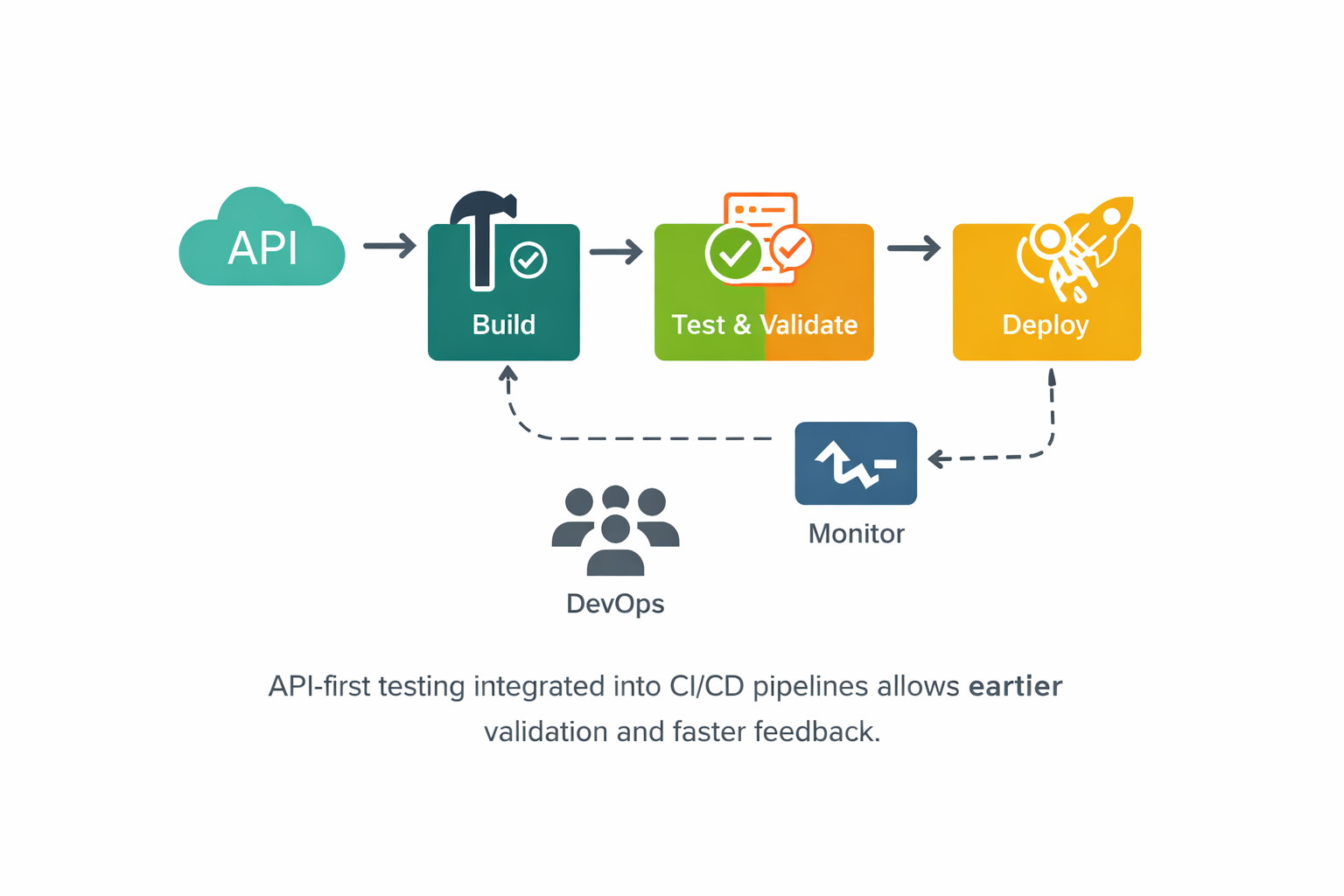
AI-assisted approaches add another layer by generating checks from real traffic, reducing maintenance, and improving coverage. Keploy fits well here by capturing real API behavior, replaying it during builds, and detecting regressions early whether flows were triggered manually or automatically.
When Should You Update a Software Testing Strategy?
Update the strategy whenever the system or team changes meaningfully underneath it:
-
Architecture changes
-
New integrations are added
-
Teams scale
-
CI/CD pipelines evolve
-
Quality goals change
A strategy should evolve with the product.
Common Mistakes in Software Testing Strategies
Mistakes I see often include:
-
Treating the strategy as a formality
-
Over-automating unstable features
-
Ignoring non-functional coverage
-
Not revisiting the strategy regularly
-
Confusing strategy with execution
Future of Software Testing Strategies
Software testing strategies are evolving alongside modern development practices. Key trends include AI-assisted testing, traffic-based test generation, continuous testing in CI/CD pipelines, and intelligent regression detection.
Tools like Keploy represent a new generation of testing solutions that automatically generate tests from real application traffic, helping teams reduce manual effort while improving test coverage and reliability.
Conclusion
A clear testing strategy doesn’t slow teams down. It helps them move faster with confidence. By aligning risk, tools, and validation early, teams can ship reliable software without last-minute surprises or unstable releases.
FAQs
What is a software testing strategy?
A software testing strategy is a high-level plan that defines how testing activities are designed, executed, and managed throughout the software development lifecycle. It outlines testing approaches, tools, environments, and quality goals.
Who prepares the test strategy?
Usually a QA lead or test manager, with input from development and product teams.
Is a test strategy mandatory in Agile projects?
It’s not mandatory, but I strongly recommend it for consistency and quality.
How often should a test strategy be updated?
Anytime there are major changes in architecture, tools, teams, or release processes.
What’s the difference between a test strategy and a test plan?
A test strategy is the high-level, long-term approach to testing across a project or org; a test plan is the detailed, short-term execution document for a specific release.
Should API testing be part of every testing strategy?
Yes, for any system built around microservices or service-layer business logic, API testing should be prioritized early since it’s faster, more stable, and scales better than UI-only validation.
What is the difference between a testing strategy, a testing technique, and a testing approach?
A testing strategy is the high-level plan for how quality gets validated across a project. A testing approach is the direction taken within that plan, such as top-down integration or risk-based prioritization. A testing technique is the specific method for designing individual test cases, such as boundary value analysis or equivalence partitioning.
What are the main types of testing methods in software testing?
Testing methods group into three contrasts: static vs dynamic, functional vs non-functional, and manual vs automated. Most strategies combine methods from all three groups, using static reviews early, functional and non-functional execution in the middle phases, and automated regression continuously.
What are the four integration testing approaches?
The four classic approaches are top-down, bottom-up, big bang, and sandwich. Top-down starts from high-level modules, bottom-up starts from core logic, big bang combines everything at once, and sandwich runs top-down and bottom-up in parallel for large systems.
Which testing strategies are used in each SDLC phase?
Early phases rely on static strategies like requirement reviews and design walkthroughs. Middle phases use unit, integration, and system testing. Later phases apply acceptance testing, release readiness checks, and post-deployment regression combined with production monitoring.