Test Automation
What Is Test Automation?
Test automation uses software tools and scripts to execute predefined test cases, compare actual results with expected outcomes, and report pass/fail status without manual intervention. It spans unit tests, integration tests, API tests, and E2E UI tests, integrated into CI/CD pipelines so every code change is validated automatically.
Manual testing does not scale. As deployment frequency increases from monthly to daily, test scenarios grow faster than any QA team can execute by hand. Automation provides consistent, repeatable validation on every commit.
Teams with mature test automation release faster, catch more bugs before production, and free 10-20% of engineering capacity for feature development.
The Test Automation Pyramid
Many fast unit tests at the base, fewer integration tests in the middle, and minimal slow E2E tests at the top.
Unit Tests: The Foundation
Validate individual functions in isolation. Execute in milliseconds. Frameworks: Jest, Vitest, pytest, JUnit. Keploy Test Agent generates them from PR diffs.
Integration / API: The Middle
Validate service boundaries: HTTP request-response cycles, database interactions. Where Keploy excels with traffic-based auto-generation.
E2E Tests: The Tip
Complete user workflows from UI to database. Reserve for critical journeys only. Playwright, Cypress. See the E2E testing guide.
Key takeaway: Inverting the pyramid (too many E2E, too few unit) is the most common structural mistake. It leads to slow pipelines, high maintenance, and frequent flaky failures.
When to Automate vs Manual Testing
Not every test should be automated. Use this framework to allocate testing effort.
Automate When...
- Tests run on every commit or PR (regression)
- Same test with 100+ input variations
- Stable interfaces unlikely to change
- Binary pass/fail outcomes (status code, value match)
- Can run in CI with mocks or containers
Keep Manual When...
- One-off or infrequent validation
- Feature still under active design
- Subjective evaluation (UX, accessibility)
- Requires specific hardware conditions
The Sweet Spot
Regression testing: stable expected outcomes, high execution frequency, catches the most production incidents. Keploy reduces creation cost to near zero by generating tests from real traffic.
Exploratory Testing Stays Manual
Simultaneously designing and executing tests using human intuition to probe for unexpected behavior. Discovers bugs no scripted test would cover. Automation frees up time for this, not replaces it.
How AI Is Changing Test Automation in 2026
Three categories of AI-driven testing have matured from experimental to production-ready.
AI Test Generation
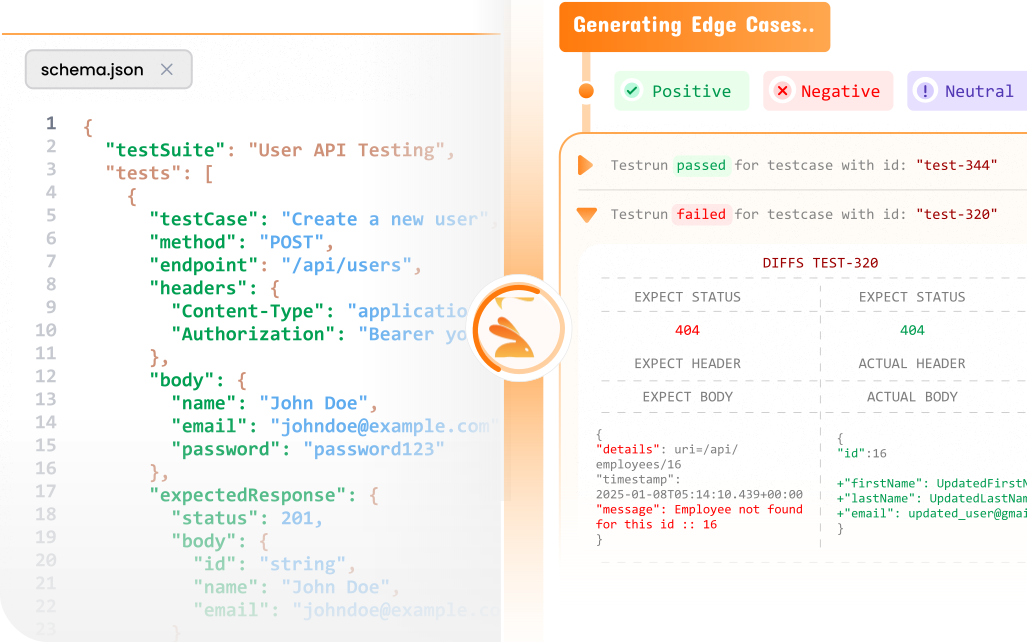
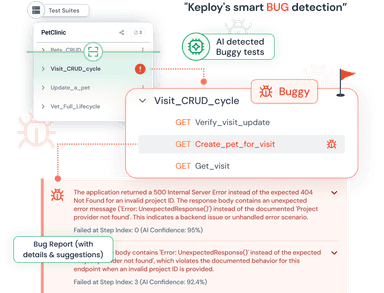
Keploy captures real API traffic via eBPF and converts it into test cases with auto-generated mocks. Keploy Test Agent uses multi-LLM reasoning to generate unit tests from PR diffs. Teams report 40-70% reduction in manual test authoring time.
Self-Healing Tests
Automatically detect when UI selectors change and update tests without human intervention. ML models identify the most likely correct replacement. Reduces E2E test maintenance burden.

Autonomous Testing Agents
AI agents explore applications without explicit scripts, combining computer vision, LLM reasoning, and reinforcement learning to simulate exploratory testing at machine speed.
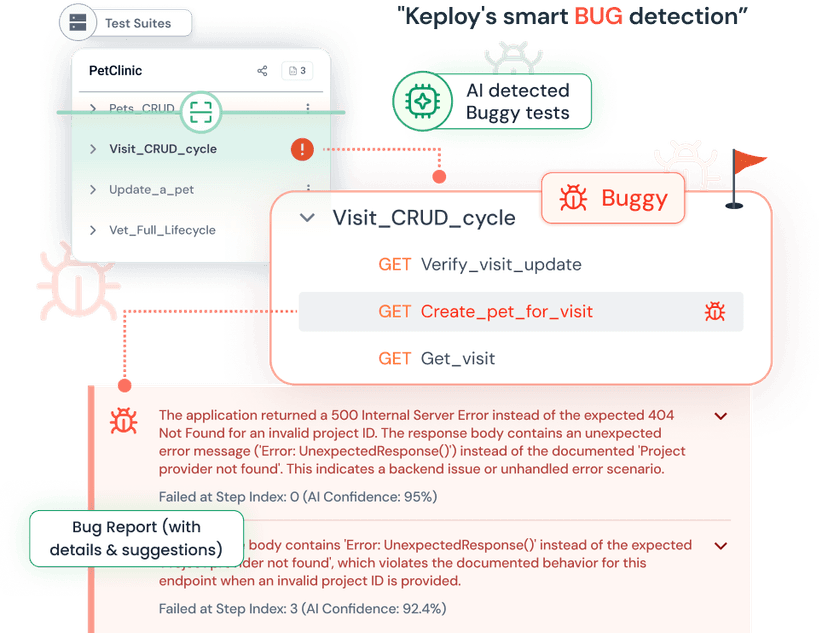
Key takeaway: AI does not replace test automation strategy. It accelerates execution. You still need a well-structured pyramid, clear automation criteria, and CI/CD integration. AI makes the pyramid easier and faster to build.
Building a Test Automation Strategy
A step-by-step plan: what to automate, which tools to use, and how to measure success.
Audit Current Test Coverage
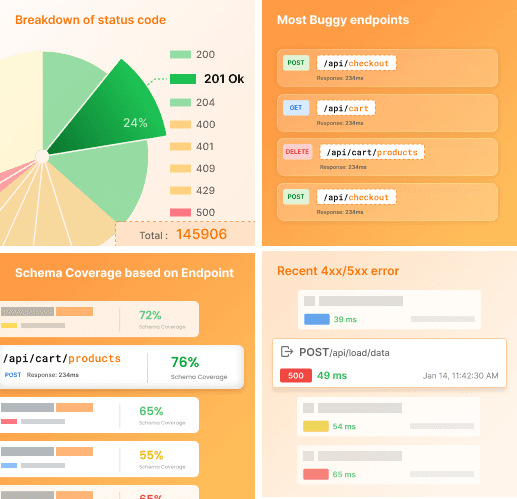
Measure code coverage (line and branch), identify services with zero test coverage, and catalog manual test procedures. Pay attention to defect escape rate: what percentage of bugs are caught by existing tests vs discovered in production.

Define Your Pyramid Distribution
Set target ratios for unit, integration/API, and E2E tests based on your architecture. Microservices: 30-40% integration/API. Monolithic UIs: 10-15% E2E. Document targets so the team has shared expectations.
Select Your Toolchain
Unit: Jest, pytest, JUnit. API: Keploy for traffic-based auto-generation. E2E: Playwright or Cypress. Contract: Pact or Keploy schema validation. Use the right tool for each layer.
Integrate into CI/CD Pipeline
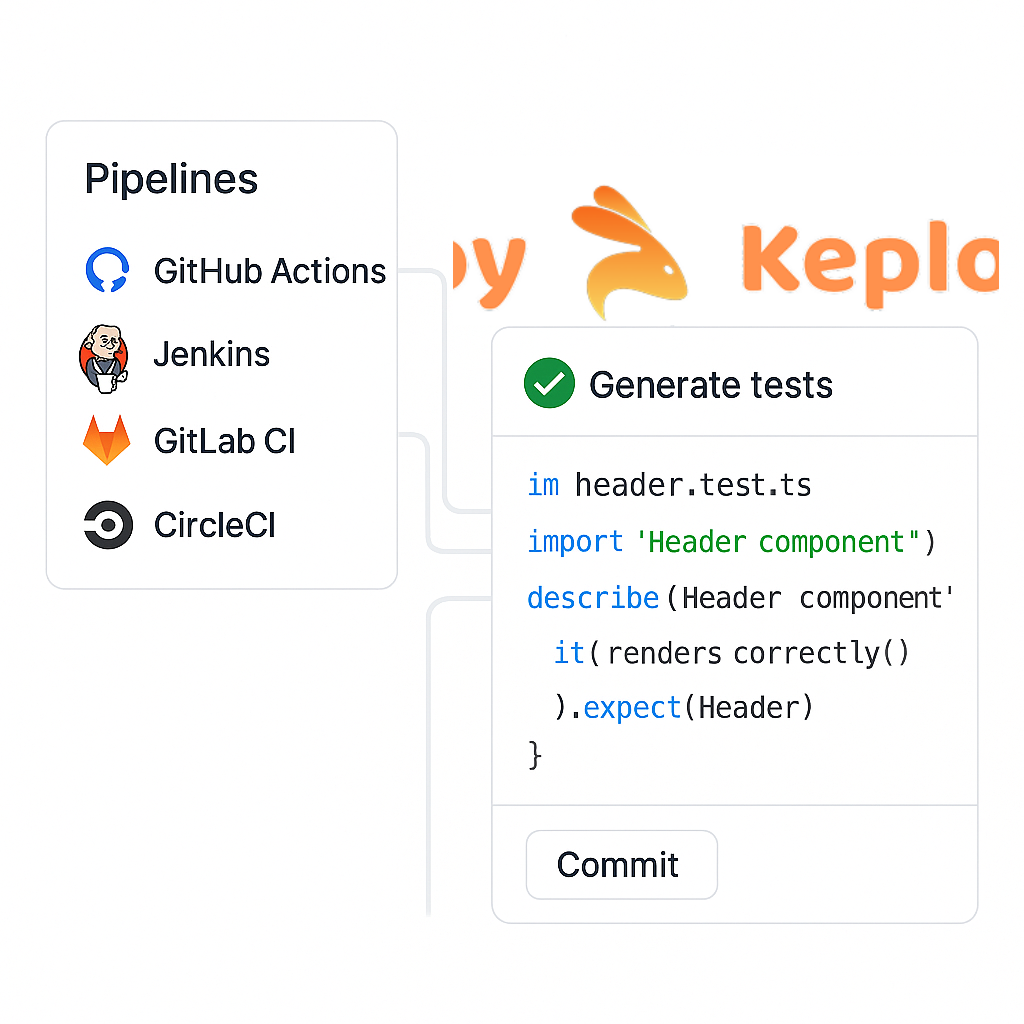
Lint + build (30s) then unit tests (1-3 min) then API/integration tests (2-5 min) then E2E on merge (5-15 min) then performance/security nightly. Gate PR merge on unit + API tests.
Establish Ownership & Maintenance
Teams that ship features also ship tests. Establish a flakiness SLA: quarantine tests above 2% flake rate. Schedule quarterly maintenance sprints for stale tests and mock re-recording.
Iterate with Metrics
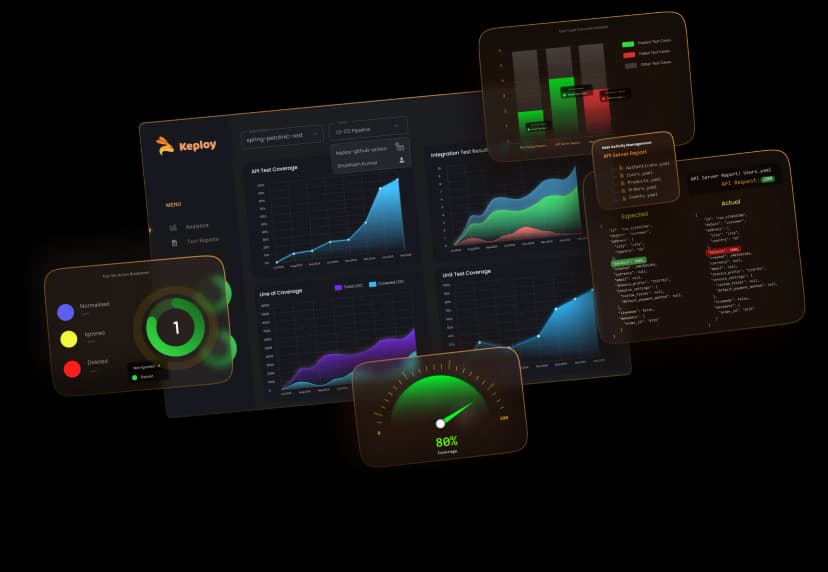
Track coverage, flake rate, execution time, and defect detection rate. Review weekly in standups. Adjust pyramid distribution and tooling based on data. Test automation evolves with your codebase.
Test Automation Metrics
You cannot improve what you do not measure. Track these metrics to evaluate and improve your automation.
Code Coverage
Identifies untested code paths
Test Execution Time
Slow tests delay feedback
Flakiness Rate
Flaky tests erode trust
Defect Detection Rate
Measures actual protection
Maintenance Cost
High cost signals issues
Automation Ratio
Tracks adoption progress
Coverage is the most commonly tracked metric, but it is misleading in isolation. Always pair it with defect detection rate and flakiness rate for a complete picture of test suite health.
Common Mistakes and How to Avoid Them
The mistakes that derail test automation efforts most frequently. Each is avoidable with the right awareness and tooling.
Inverting the test pyramid
Too many E2E tests, too few unit tests. Leads to slow feedback, high maintenance, and frequent flakiness. Build the base first.
Ignoring non-determinism
Asserting on exact timestamps, UUIDs, or random values causes intermittent failures. Use field-level matchers or Keploy's AI noise detection.
Testing implementation details
Asserting on internal variables or private methods breaks on every refactor. Test behavior through public interfaces instead.
Not running tests in CI
"It works on my machine" is not a substitute for CI. Integrate tests with clear pass/fail gates. If too slow, restructure the pyramid.
Neglecting test maintenance
Tests are code. They need refactoring and cleanup. When broken tests get disabled instead of fixed, the suite degrades silently.
Over-mocking everything
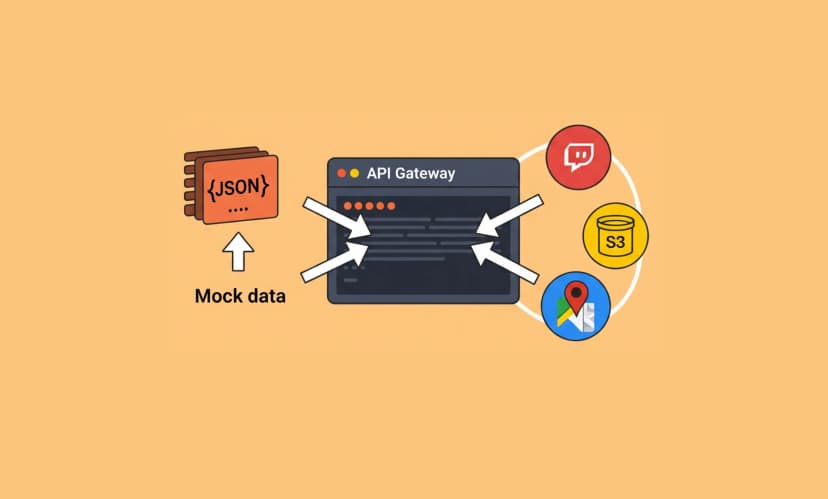
Mocking every dependency hides real integration bugs. Use a balanced approach or Keploy mocks that come from real interactions.
How Keploy Fits Into Your Strategy
Keploy addresses the middle layer of the testing pyramid with a fundamentally different approach: generate tests from real traffic instead of writing them.
Auto-Generated Tests from Real Traffic
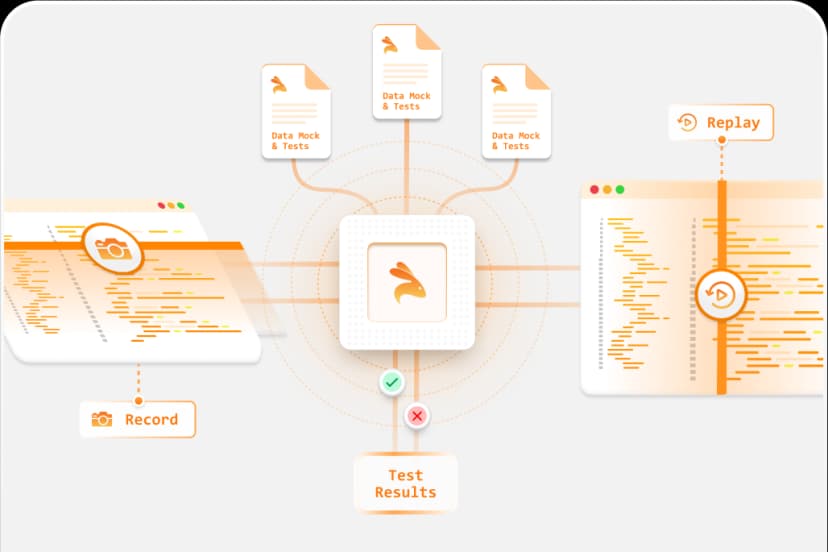
eBPF captures real API traffic at the kernel level. Every request, database query, and downstream call is recorded. Automatically converted into replayable test cases with auto-generated mocks. No SDKs, no middleware, no code changes.
Zero-Maintenance Mocks
Traditional mocks require engineers to write and maintain responses for every dependency. Keploy mocks are captured from real interactions, always accurate. When dependencies evolve, re-record traffic to update automatically.
Non-Determinism Solved
AI noise detection identifies and excludes non-deterministic fields from assertions. Time-freezing replays the system clock at the original recording time. Tests are deterministic by design.
CI/CD Native
CLI runs generated tests in your pipeline. Tests execute in seconds with mocked dependencies, no infrastructure to spin up. GitHub Actions, GitLab CI, Jenkins integration with detailed diff reports.
See Keploy in Action
How traffic-based test generation, mock creation, and flakiness elimination work in practice.
FAQs
Join our GlobalCommunity
Connect with developers worldwide. Follow updates, ask questions, share feedback, and ship faster with other Keploy builders.


“Best report of integration and API tests I've seen — which we don't get from RestAssured.”
G2“Future of microservices testing. I don't write tests now!”
Mahfooz A. · G2 · 5/5“An amazing product that simplifies the automation.”
Gartner · 4.0